
Haining Project – Phase I
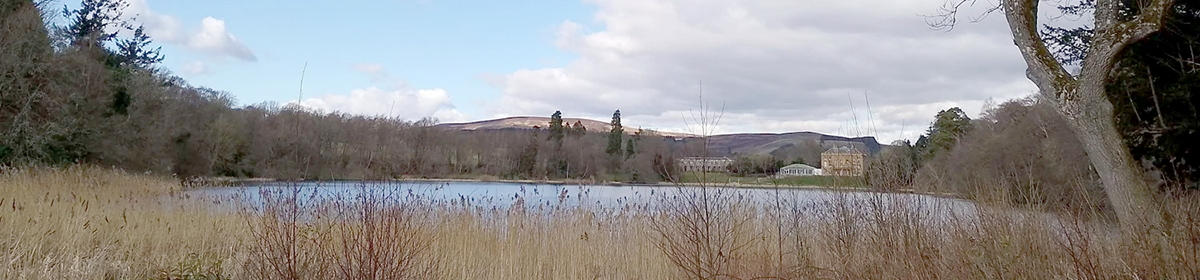
Bright Green Nature has been gathering data on the wildlife at the Deer Park since 2022. In 2024 we were awarded funding from the Rewilding Britain Innovation Fund for a 14 month programme to:
- Identify which habitats and species (native and non-native) are already present on the neighbouring Haining site
- Understand how that land is being used today and
- Develop a plan for community engagement
Data from this first phase (completed late 2025) will enable us to develop and implement a rewilding plan – to restore native habitats and, where appropriate, reintroduce key species – while respecting the historical character of the landscape and addressing the needs of the local community.
About the Haining Estate
The Haining estate was bequeathed to the people of Selkirkshire in 2009 and is run by the Haining Charitable Trust. The estate is deeply involved in the Selkirk community, playing an active role in local activities and supported by dozens of regular volunteers.
Community
Community is as important to Bright Green Nature’s work and approach as it is to the Haining Estate. We’re embedded within communities, having close links with neighbouring farmers, residents and local schools, whose students regularly use in the Deer Park site learning.
Bright Green Nature also has close working relationships with local and national nature based groups and we’re excited to bring all these connections together, enabling the Haining and Deer Park sites to serve as “Living Classrooms” for the community and providing opportunities for people to develop interest, skills and knowledge.
We believe strongly in the symbiotic benefits of this approach: the community can share experiences and enjoying the many benefits of spending time in nature and in doing so, assure the protection of these valuable spaces over the decades to come.
Community Engagement
Our Biodiveristy Officer, Lisa McLeish, led lots of events to involve our local community in the project:
- Community surveys and consultations to help ensure the community is actively involved in shaping the future of the Haining estate.
- Creation of a Junior Rangers group. This involves a group of 10 young people between 9 and 15 years old who are interested in nature and the environment and want to learn more about what it means to work in this field.
- Scottish Borders Fungus Group helped us survey the fungal species present on the site.
- Dawn Chorus Walks
- Butterfly Walks
- Moth Mornings
Habitat surveys, species monitoring & ecological recordings
- Our habitat survey provided a comprehensive overview of the habitats across the Haining Estate, including broadleaf woodland, plantation, scrub, marsh, grassland and standing water.
- We identified 626 species, including legally protected and notable species such as Great Crested Newts (Triturus cristatus), six species of bats, Pine Martens (Martes martes), Red Squirrels (Sciurus vulgaris), and Waxcap fungi (Hygrocybe spp.).
- We also recorded several invasive non-native species (INNS) -rhododendron (Rhododendron ponticum), Grey Squirrel (Sciurus carolinensis), and Snowberry (Symphoricarpos albus)—highlighting the need for ongoing management to protect native biodiversity.
Partner organisations
- Educational Institutions, helping promote environmental awareness and stewardship amongst young people
- Specialist ecological and conservation bodies provided valuable expertise and data to support species and habitat monitoring.
- Local Organsations, strengthening local capacity for the project and future initiatives
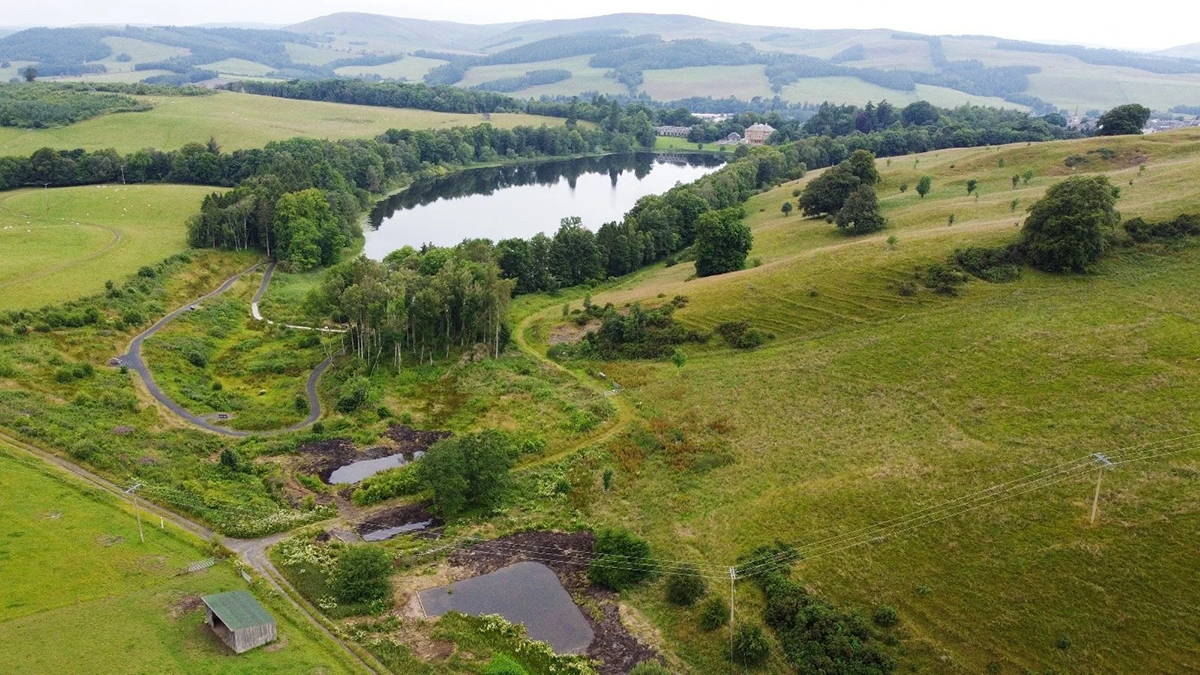
Building on the successful collaboration between Bright Green Nature and the Haining Charitable Trust, which started with our wetland restoration project, we are working on follow up projects with the ultimate aims of:
- Developing ecological connectivity between the Haining site, Bright Green Nature’s adjacent Deer Park and other neighbouring sites
- Developing social connectivity with the local community, providing opportunities to engage with their local, natural, and cultural heritage and their restoration and protection


Key Findings and Recommendations
The Haining is home to a range of notable, legally protected and conservation-priority species, illustrating the importance of The Haining as a landscape that supports both aquatic and terrestrial life cycles, provides breeding and foraging opportunities and maintains habitats of regional and national significance. Species include:
- Great Crested Newt (Triturus cristatus)
- 6 species of bat (two thirds of the species of bat found in Scotland)
- Great Crested Grebe (Podiceps cristatus)
- Pine Marten (Martes martes)
- Red Squirrel (Sciurus vulgaris)
- CHEGD Fungi (Clavarioids, Hygrocybe species, Entoloma species, Geoglossum and relatives and Dermoloma and relatives)
The community use the Haining site for a wide range of activities, including fitness, dog walking, nature appreciation, birdwatching, socialising, fishing
There is strong community interest in a broad range of activities at the Haining, including:
- Arts, crafts and cultural events
- Guided walks and talks
- Local history and heritage events
- Learning practical conservation skills
- Children and family nature events
Based on the findings of the project, we were able to make several recommendations for future actions
- With a focus on using a pragmatic approach to nature recovery, compatible with the site’s status as a popular, community-owned, multi-use estate.
- With an emphasis on ‘mosaic rewilding’: restoring habitats incrementally, strengthening ecological connectivity and restoring key natural processes, while respecting heritage, access and existing land uses.
The project has established a robust ecological and social baseline for The Haining, confirming its high biodiversity value and importance as a well-used community estate.