

The Bright Green Nature Digital Toolkit
Initially developed to assist busy school teachers (but now available to all our website visitors) our Digital Toolkit aims to make it easier for everyone to initiate small scale nature restoration projects. By providing you with downloadable (and printable) information sheets, covering the most popular types of projects (from Bog Gardens to Wild Flower Meadows), we hope to save you from wasting your valuable time browsing online, and therefore help you to spend more fulfilling time outdoors.
All the information is relevant to our local area, uses sustainable techniques, and should be straightforward and easy to understand – even to total beginners. As you will see, nature restoration projects can be relatively simple (and inexpensive) to get started, as well as being highly rewarding and mostly maintenance free in the longer term.
People have not been kind to nature but given a chance nature can bounce back. The more of us that make an effort (no matter how small), the greater the impact. Not knowing how to get started is no longer an excuse – just read through the attached pages for inspiration and ideas.
The Bright Green Nature Team are available (and happy) to answer your questions about your own project. Just email fraser@brightgreennature.org for ongoing guidance and support. Feedback and shared ideas are also always welcome!
2. What is Rewilding
Undoubtedly, rewilding means different things to different people, and almost everyone you ask will give you a different definition.
3. Small Ponds
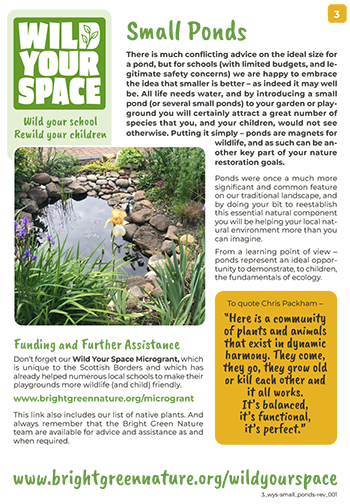
Putting it simply – ponds are magnets for wildlife, and as such can be another key part of your nature restoration goals.
4. Bog Gardens
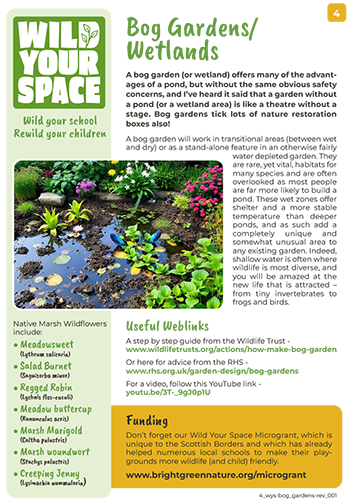
A garden without a pond (or a wetland area) is like a theatre without a stage.
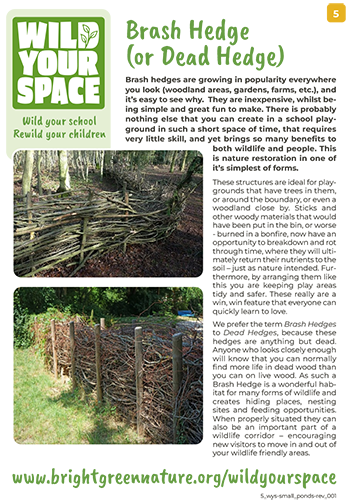
5. Brash Hedges
Brash hedges are growing in popularity everywhere you look (woodland areas, gardens, farms, etc.), and it’s easy to see why.
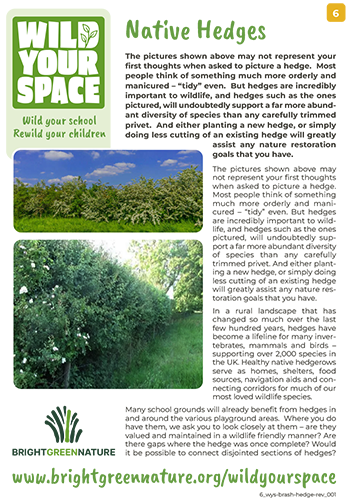
6. Native Hedges
Either planting a new hedge, or simply doing less cutting of an existing hedge will greatly assist any nature restoration goals that you have.
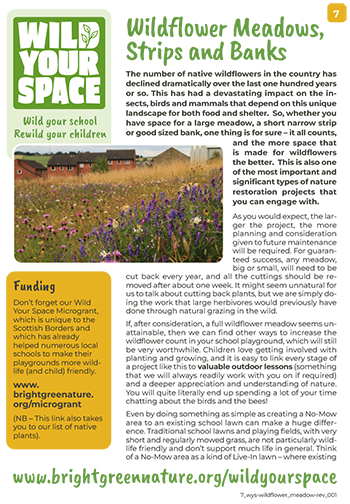
7. Wildflower Meadows
Whether you have space for a large meadow, a short narrow strip or good sized bank, one thing is for sure – it all counts
Coming soon…
8. Grass Margins
9. Sensory Gardens (Including Herbs)
10. Native Climbing Plants
11. Spring Bulbs and Wildflowers
12. Trees and Orchards)
13. Living Willow Structures
14. Butterflies and Moths
15. Bees and Other Pollinators
16. Composting
17. Wormeries
18. Bug Hotels
19. Bird Nesting Boxes
20. Hedgehogs (and Trail Cameras)